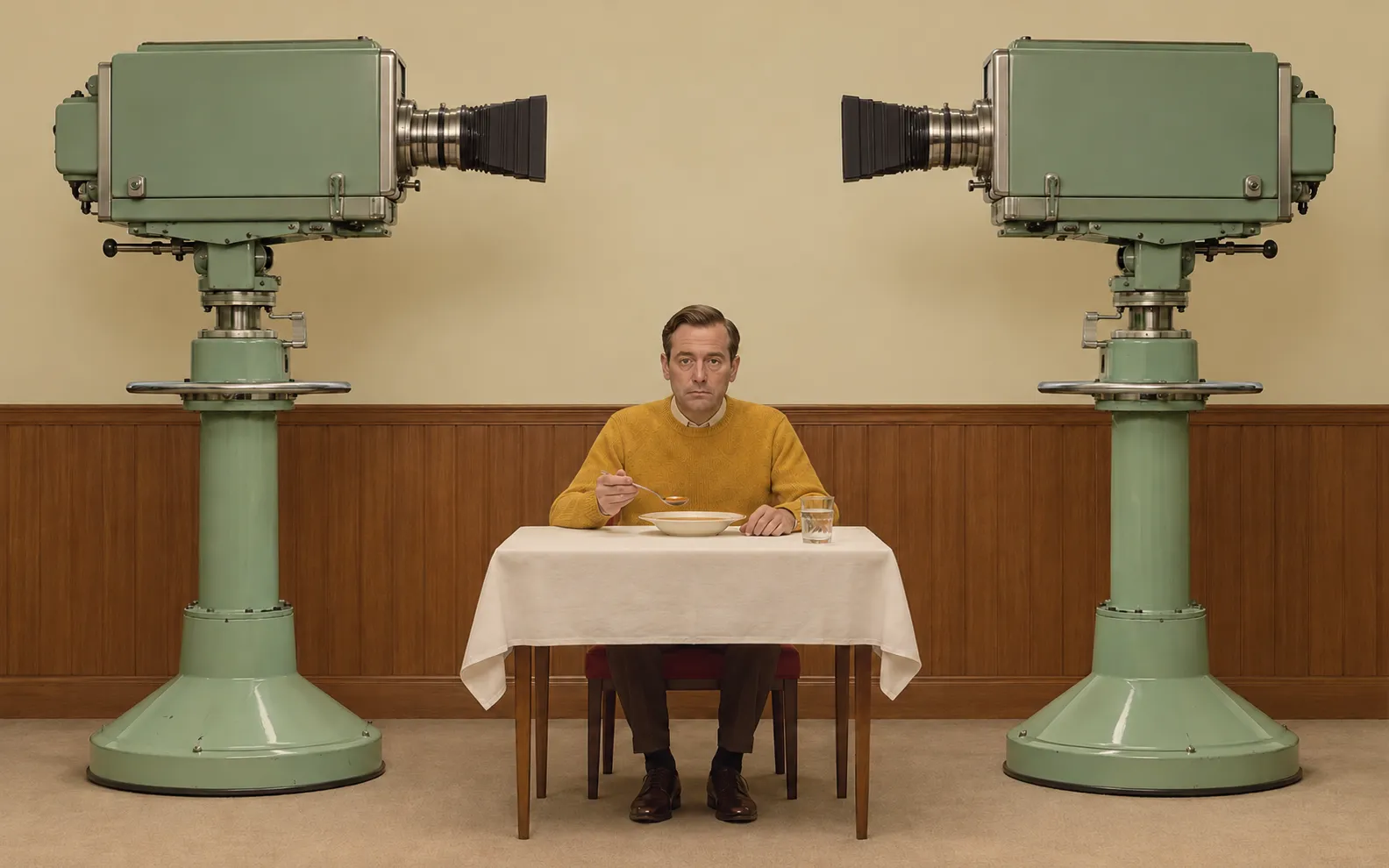
There is a particular stage in every home renovation when the builder stops discussing the crack in your wall and starts discussing the geological stability of your neighbourhood. You invited someone to fix a small problem. You are now considering whether the house was ever a sensible idea.
Sam Altman reaches this stage around twenty minutes into his conversation at Stanford Graduate School of Business. Discussing cybersecurity, he says: “And I no longer think we're going to be able to just patch all the bugs.” Instead, he argues, we will need to use AI to build a different kind of defence. The repairman has inspected the wall. He recommends a second house, continuously patrolling the first.
It is a wonderfully economical description of our technological predicament. We are building machines that can discover weaknesses in the systems we depend on, at a pace that may overwhelm our ability to repair them. The proposed response is to build machines capable of keeping up. Somewhere, a procurement officer is opening a spreadsheet with the exhausted dignity of someone who recognises a recurring expense.
To be fair, Altman’s argument deserves more than the obvious joke about selling umbrellas after investing in rain. Technologies regularly change both attack and defence. If automated systems become better at discovering vulnerabilities, defenders have excellent reasons to use them too. Refusing assistance on grounds of philosophical tidiness would be an unusual way to protect a hospital network. Nobody wants their incident report to begin with a principled objection to modernity.
But there is a difference between adopting a better tool and discovering that participation has become compulsory. A useful assistant is something you can decline. An essential defence system against an environment transformed by similar systems is a more complicated proposition. You may still choose whether to use AI to write your holiday itinerary. Your organisation may have rather less freedom about employing it to survive the week.
This gives the familiar promise of empowerment an interesting texture. We were going to have more options, more agency, more time to pursue our interests. We may get all three. We may also acquire a permanent obligation to maintain a technological bodyguard. The future could be wonderfully liberating, provided your liberation has administrator privileges and someone remembered to renew the licence.
Altman, to his credit, does not spend the entire conversation pretending this is straightforward. He argues that people should remain in control and that power should be distributed. He worries about systems becoming too capable too quickly. He suggests that progress may require pacing. These are serious concerns, and hearing them expressed matters. They also sit awkwardly beside the industry’s enthusiasm for making every previous capability benchmark look quaint by Thursday.
The difficulty is institutional as much as technical. A company can sincerely want humanity to retain control while competing to build systems that make human supervision increasingly difficult. No secret villainy is required. Ordinary incentives will do. Each team improves its product, each customer demands more capability, each investor expects progress, and eventually everyone arrives at a destination that nobody remembers selecting on the booking form.
The cybersecurity passage makes this tension unusually concrete. Patching suggests a defect that can be located, repaired and, with luck, forgotten. A continuously operating defence suggests a condition that must be managed indefinitely. Imagine buying a washing machine and discovering that clean clothes now depend on a permanent diplomatic relationship between two competing intelligences. The spin cycle works beautifully. The sovereignty arrangements remain under discussion.
There is another revealing thread in the interview. Altman hopes AI will help produce something closer to a renaissance than another industrial revolution. He describes a future with greater room for creativity, exploration and discovery, while acknowledging the economic pressure towards relentless efficiency. It is an appealing ambition. Unfortunately, a renaissance is difficult to put into a quarterly earnings presentation. Eliminating twelve positions fits comfortably on one slide.
That does not make the ambition impossible. It means its success will depend on choices that capability alone cannot settle. Who gets the benefits? Who carries the cost of protecting essential services? Who can question an automated decision, and obtain an answer from someone authorised to change it? These questions are less glamorous than superintelligence. They are also where the promise of human control acquires practical meaning, or quietly loses it.
A machine can help identify a vulnerability. It cannot make the distribution of responsibility fair simply by identifying it faster. Nor does adding another model automatically resolve the question of who watches the first. At some point, the organisational chart needs a person who can be held accountable, rather than another arrow pointing towards a box labelled advanced monitoring.
Perhaps the most charming contrast arrives when Altman discusses ordinary life. His advice centres on family, meaningful work, health, enjoyment, meals with other people and time outdoors. After all the talk of accelerating intelligence, the recommended human operating system remains remarkably familiar. Have dinner. Take a walk. Find something worth doing. Your grandmother could have delivered much of the closing guidance, although she might have asked why the servers needed so much electricity.
There is something reassuring in that continuity. Human life need not become obsolete because machines become more capable. But preserving its ordinary pleasures will require more than confidence that people adapt. Someone must build institutions, incentives and safeguards that leave room for those pleasures. Otherwise, the promised renaissance risks becoming a very efficient economy whose inhabitants are constantly checking whether their defence shield is still connected.
By all means, build better defences. We may need them. But a future worth protecting should leave us enough attention to enjoy dinner. The firewall can have the night shift.

No comments yet