For decades, buying software has resembled buying a department store because you need a pair of socks. You arrive with a modest problem and leave with an account, a subscription, several gigabytes of possibilities, and an updater that considers itself a member of the family.
Artificial intelligence threatens to make this arrangement look peculiar.
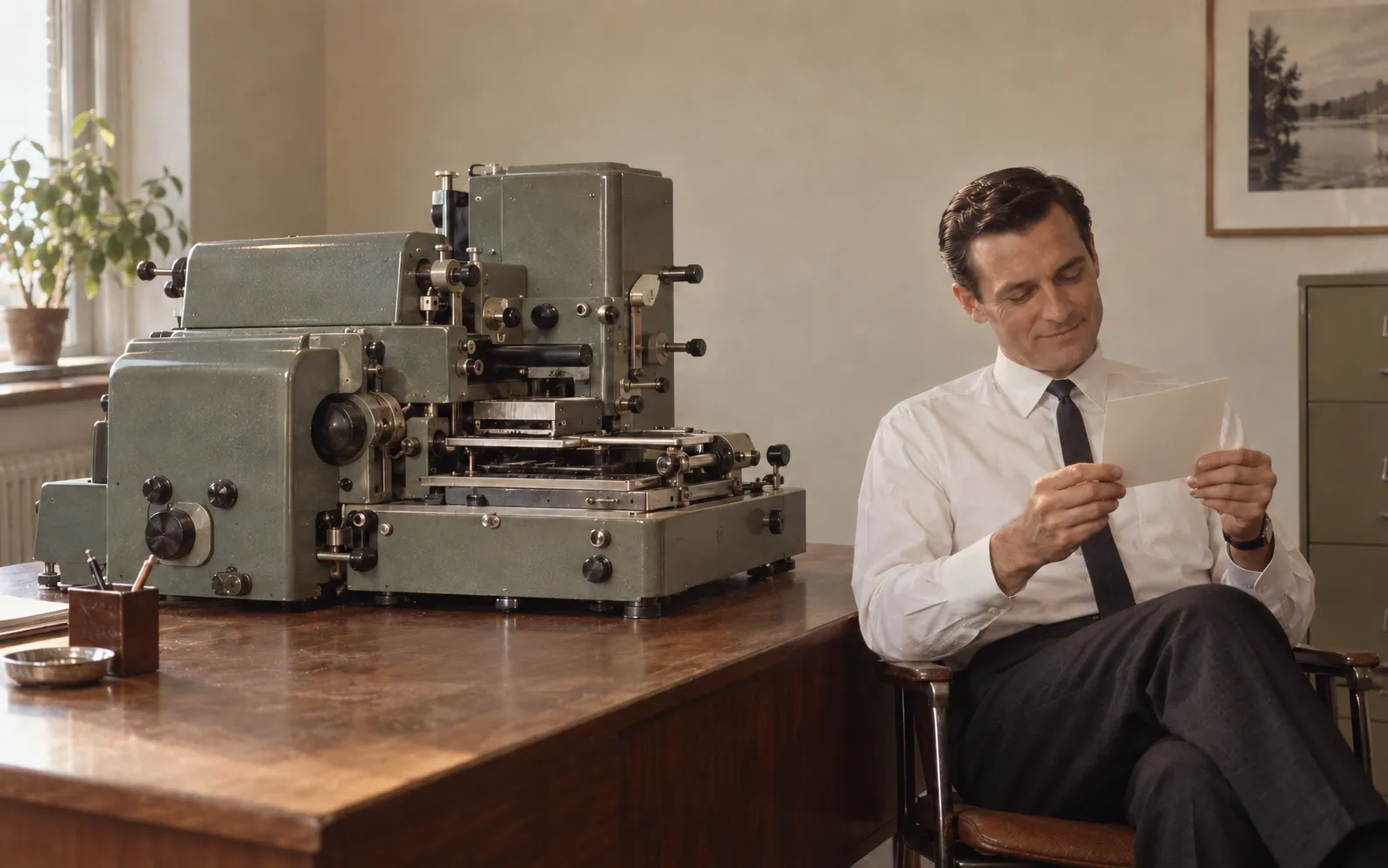
In his recent video, Dave Plummer investigates AI cloning against the backdrop of purported Photoshop and Microsoft Office recreations. His own experiment uses a Windows calculator binary, reverse engineering, and AI to produce a working Rust reconstruction. He carefully distinguishes a successful demonstration from proof of perfect equivalence. The achievement is striking enough without pretending that Adobe’s entire engineering department has been replaced by a particularly productive lunch break.
An old programmer’s joke supplies the slogan: “If you can read binary, everything is open source.”
Excellent joke. Terrible licence agreement.
Being able to understand a program does not give you permission to reproduce its protected elements. “Open source” describes permissions, not how confidently someone can stare at hexadecimal. Reading a novel in French does not entitle you to publish its English translation under your own name, even if you have thoughtfully changed Pierre to Steve.
Plummer’s central objection deserves attention: fresh source code does not necessarily establish independent creation. Feeding an existing executable through an elaborate translation process may preserve protected expression. A machine cannot wash away another author’s contribution merely by changing the programming language. Rust has many virtues; absolution is an ambitious addition.
Yet copyright does not grant ownership of everything software does. The US Copyright Office distinguishes protected expression from ideas, algorithms, systems, and methods. Europe’s Court of Justice likewise held in SAS Institute v World Programming that program functionality is not protected as the expression of a computer program. Otherwise, whoever first sold a spreadsheet might demand royalties every time humanity arranged numbers in rectangles.
The practical distinctions matter. Independently implementing useful behaviour, studying a lawfully used application, and translating its internal implementation are different activities. Licences also matter, although their restrictions are not universally enforceable: the European court recognised rights to observe, study, and test within specified conditions despite contrary contractual provisions. “My AI wrote it” answers none of the important questions about what was copied, how it was obtained, or which law applies.
But the more interesting disruption begins when we stop asking AI to recreate Photoshop.
Why would I want Photoshop?
Perhaps I want to straighten six photographs, remove a cable, and prepare images for a website. Perhaps I want to compare three quotations, identify suspicious expenses, or produce a letter whose formatting survives contact with another computer. The application is an arrangement we have historically tolerated to reach the result.
Imagine describing the task and receiving a small, temporary tool built around it: six images, three controls, a preview, an undo button. No dashboard announcing a collaboration revolution. No invitation to discover your creative journey. The journey is removing the cable. We would like to arrive before dinner.
Such a tool would not need to reproduce decades of someone else’s product decisions. It would need to meet today’s requirements. That does not automatically settle its legal status, but it changes the question from how closely we may copy a product to how directly we can solve a problem.
And even that may involve unnecessary ceremony.
If I can describe the desired outcome clearly enough for AI to build the tool, perhaps I can ask it to deliver the outcome. Compare the quotations. Flag the anomalies. Prepare the images. Show the changes and the evidence. Ask before making an irreversible decision. The interface could shrink to a conversation and something worth inspecting.
There will still be reasons to work manually. A photographer may discover what an image needs by adjusting it. A writer may need the resistance of sentences. Sometimes using the tool is part of thinking, and sometimes it is simply enjoyable. Software made on demand could support that agency, offering controls when we want to explore and results when we want to finish.
None of this makes reliable software effortless. A disposable image cropper and a payroll system have different obligations. Security, compatibility, accessibility, repeatability, and maintenance do not disappear because the prototype arrived quickly. Someone must still establish that the numbers are right. A cheerful explanation from the entity that calculated them is a charmingly circular audit.
Established vendors therefore retain something valuable to sell: tested behaviour, durable formats, dependable collaboration, and support when things break. The difficult adjustment may be charging for those assurances when generating another screenful of features has become cheap. Professional tools will survive wherever their accumulated reliability and precision justify their cost.
Nor should we confuse escaping application subscriptions with escaping rent. If every temporary tool depends on one model provider, we may simply exchange the software suite for a conversational tollbooth. The relevant questions become whether we can keep the tool, inspect its workings, export our data, and continue using it when the provider changes its prices or personality.
That leaves the industry facing two rather different arguments. One concerns the legitimate protection of creative work. The other concerns whether customers must continue buying software in the familiar shape of large, permanent products. Winning the first argument does not settle the second.
The future may contain fewer occasions on which we acquire an application at all. We will describe a need, receive a result, and occasionally ask for a handle so we can adjust it ourselves.
The most unsettling message for a software company may therefore be perfectly lawful, politely phrased, and entirely free of stolen code:
“I don’t need a copy of your product. I’ve finished the job.”
No comments yet