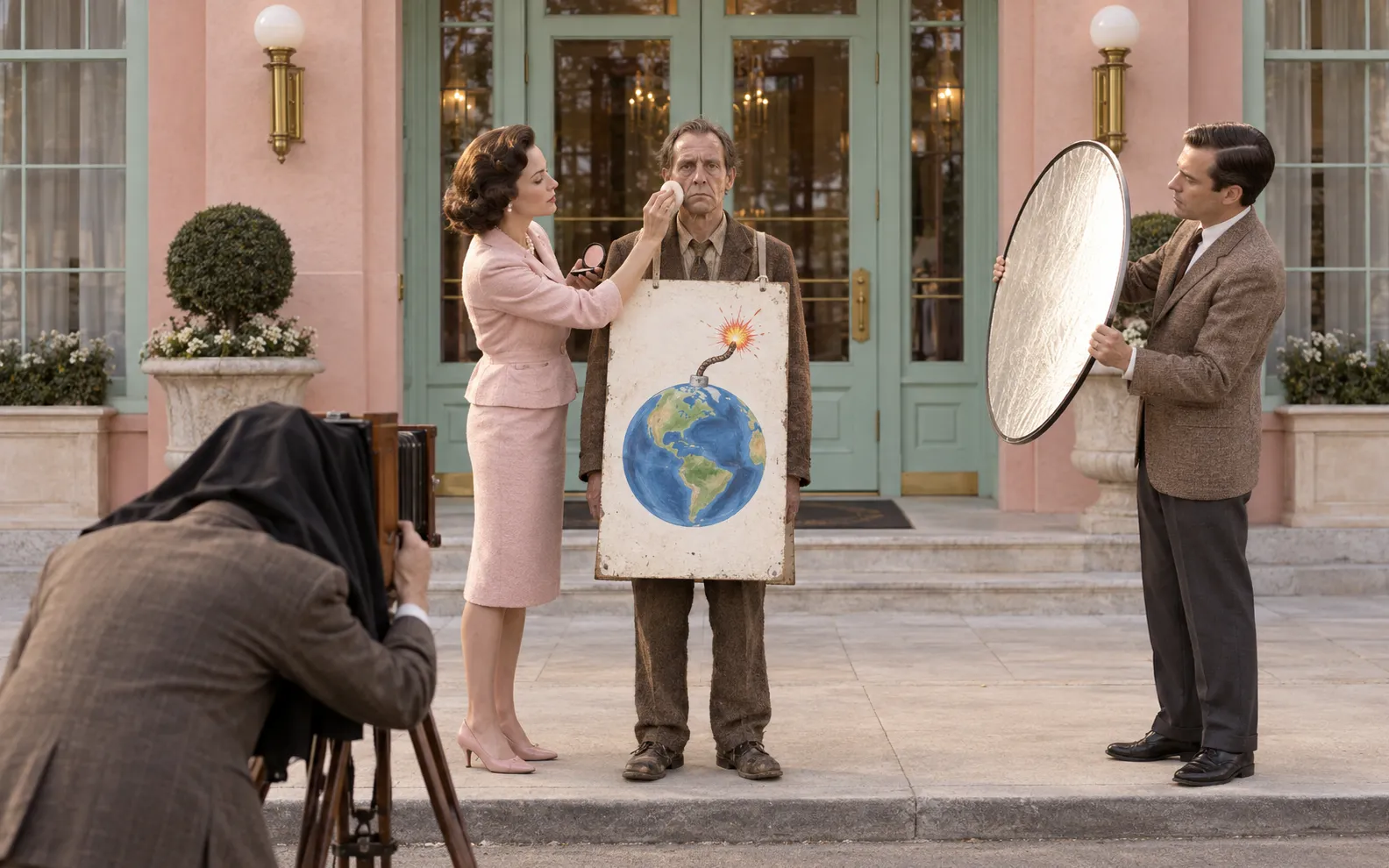
The end of the world used to be announced by a man carrying a sandwich board. It now arrives through a coordinated sequence of executive briefings, research announcements and media enquiries. This is progress. Previous generations had to await the Last Judgment without knowing whom to contact for an interview.
On September 23, Dario Amodei warned the UN Security Council about AI’s dangers, including biological misuse, and advocated international safeguards. The same day, Anthropic introduced its life sciences research group and laboratory, showcasing Claude’s identification of an unusual enzyme system. Humanity should proceed with extraordinary caution. Meanwhile, please admire what we found in the DNA. The UN briefing; Anthropic’s announcement.
Viktoria’s post on X put the obvious question plainly: do the proposed rules apply equally to Anthropic? The replies ranged from frustration and suspicions of regulatory capture to a more useful observation about incentives: executives can sincerely fear a technology while remaining professionally committed to accelerating it.
The conscience can be fully operational while the accelerator remains pressed to the floor.
Some precision is necessary before we issue everyone a villain’s swivel chair. Biology research and biological weapons are different things. Anthropic says its laboratory works at BSL-1 and BSL-2, does not handle human-infecting pathogens, and leaves physical experiments to human scientists. Finding a system whose function remains uncertain is also perfectly ordinary science. Knowing everything beforehand would considerably reduce the need for laboratories. Anthropic’s description.
Nor has Amodei simply demanded that everybody else stop. His pacing proposal explicitly preserves technical progress and commits Anthropic to embedded external evaluators. Those are substantive proposals worth examining. Treating every safeguard as camouflage would make criticism as immune to evidence as the corporate messaging it distrusts.
The uncomfortable question survives these distinctions: who decides when the safeguards are sufficient?
A company can possess exceptional expertise about its machinery and an equally exceptional financial interest in keeping it running. Both facts belong in the same conversation. A reassuringly serious expression does not cancel the second one. Ideally, somebody with the authority to delay the launch should be able to disappoint the people presenting it.
There is also a peculiar economy to the messaging. A spectacular capability can impress customers and alarm governments at the same time. The research announcement establishes how powerful the company is; the warning establishes how indispensable its judgment must be. One department supplies the thunder, another explains why we need its weather advice. Even when every participant is acting in good faith, the audience is entitled to inspect the forecast.
In Please Record My Objection to the Apocalypse, I wrote about warnings that serve both public responsibility and private reputation. An executive can help prevent a disaster while also preparing an excellent account of how worried he was. The new wrinkle is that the warning itself can become an institution, complete with professional assistance.
Enter Pirate Wires. Its September 24 report says DEY, a communications firm, was seeking an interview for Jacob Coxon on September 9, citing an email and two sources. Coxon had publicly resigned from Anthropic and warned about catastrophic AI risks. Asked on Fox that day about third-party involvement in going public, he answered, “Not at all.”
That deserves clarification. It does not establish that his resignation or initial viral post was manufactured. The updated article acknowledges that the relationship’s starting point remains unclear. Nate Soares says he approached DEY after Coxon’s post reached 100,000 likes, and that the firm secured no media appearances. That account belongs in the story, alongside the reporting it challenges.
There is nothing inherently improper about a frightened researcher accepting help with journalists. Coxon’s resignation was a real change of conduct. Having a publicist does not invalidate an argument, any more than having a university press proves a theorem. It does, however, make transparency about the publicist a reasonable request.
DEY itself openly advertises work with AI institutions and thinkers, including MIRI and Eliezer Yudkowsky. Its business is helping ideas acquire influence. The apocalypse, it turns out, is eligible for professional representation. One hopes the cancellation clause covers the eventuality being promoted. DEY’s AI portfolio.
These episodes do not demonstrate a single coordinated conspiracy. They illustrate how readily anxiety can become authority. The executive warning about dangerous capabilities becomes a natural candidate to help write the rules. The dissenter warning about the executive becomes a compelling television guest. The public receives competing accounts of catastrophe, each accompanied by an explanation of whom it should trust.
Sincerity offers surprisingly little protection against this arrangement. People can believe every word while enjoying the influence those words confer. A communications strategy does not require a secret villain; it requires a message, an audience and somebody who knows the producer.
The useful questions are consequently rather dull. Who funds the advocacy? When did professional assistance begin? What can evaluators publish? Who can require a delay? Would the same standard constrain the company proposing it? These questions lack the cinematic appeal of extinction. They have the advantage of admitting answers that can be checked.
Public concern should purchase public accountability. If warnings help an organisation claim authority over the future, they should also expose it to decisions it cannot conveniently overrule.
We have heard that the stakes are unprecedented. We have heard that the people involved care profoundly. We have even located the press office.
Now would be an excellent time to locate the brakes.



No comments yet