Bill Gates has spent most of his public life on the side of the progress bar. Faster processors, cheaper software, scalable vaccines, optimized agriculture: if civilization were a spreadsheet, he would look for the slowest formula. This makes his new essay on artificial intelligence interesting for a reason that has little to do with whether he is an optimist or a pessimist. Gates, high priest of efficiency, has discovered heresy. He now thinks a little inefficiency may be good for us.
His essay begins on familiar Gatesian terrain. Artificial intelligence could be the greatest equalizer in history or an industrial-strength inequality machine. It may improve medicine, education, farming and government services while also eliminating jobs, empowering criminals and giving children synthetic friends who never insist they go outside. Gates does not so much sit on the fence as provide the fence with a risk register, a tax proposal and an international oversight committee.
The most revealing moment comes late in the argument. Gates proposes taxing AI tokens and robots, partly to reduce the fiscal advantage of replacing payroll-tax-paying humans with deductible machinery. Such a tax, he writes, might slow automation and preserve employment, even at the cost of some economic efficiency. Thanks to accelerated innovation, he believes society could afford that inefficiency.
Read that again, because somewhere an Excel cell has just become self-aware. The man whose fortune grew from selling tools meant to make offices more productive is suggesting that productivity should occasionally be asked to wait in the lobby.
This is not hypocrisy. It is more interesting than hypocrisy. Gates is confronting a defect in the language that made the digital revolution sound inevitable and benign: efficiency is excellent at measuring output and strangely helpless at measuring why an activity matters. A machine may deliver bad medical news with flawless diction, perfect timing and no need for lunch. That does not mean anyone wants to receive a terminal diagnosis from an appliance that immediately asks them to rate the interaction.
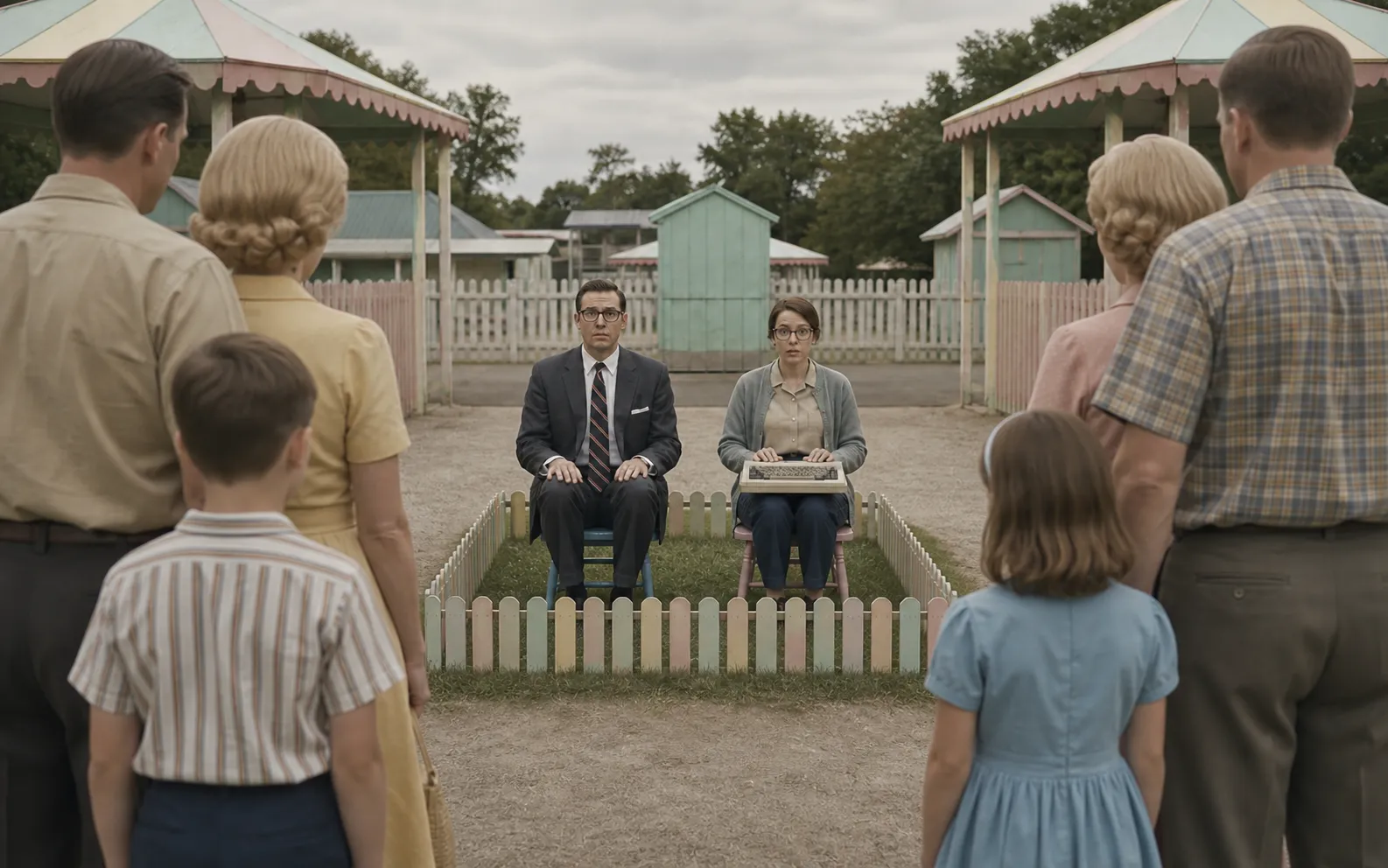
Gates calls the territory protected from automation “Human Reserved.” He compares it to a nature reserve: land could be developed, but we leave it alone because something would be lost. It is appealing, although not entirely flattering to our species. We may end up behind the little wooden fence, preserved in our native habitat and observed by schoolchildren. “Here we see the human caregiver. Note the inefficient eye contact and the expensive pauses.”
Yet the metaphor contains a serious insight. In some occupations, human presence is not an inefficient delivery mechanism; it is part of the product. A string quartet does not improve Beethoven by finishing in twelve minutes. A teacher who lets a child struggle with a problem is not malfunctioning. A caregiver who sits silently beside a frightened patient may produce nothing that fits neatly into a quarterly report, while doing the most important work in the building.
Economists have long described the rising cost of labor-intensive services through the Baumol effect: some activities cannot become dramatically faster without becoming different activities. Gates is proposing something almost inverse. Even where AI makes acceleration technically possible, society may decide that speed is not the goal. The “disease” may occasionally be the cure.
There are hazards. A Human Reserved zone could become less like a national park and more like a petting zoo. Humans might be retained to provide warmth, dignity and legal responsibility while machines perform the valuable work and their owners collect the valuable income. Worse, human attention could become a luxury product. Wealthy patients would get a doctor; everyone else would get a highly accurate kiosk with excellent multilingual support.
Gates himself raises the awkward questions: Who chooses the reserved occupations? How are the rules enforced? What happens when one country preserves human jobs and another automates them? These are not minor details. They are most of the policy. Nor is the empirical case for imminent mass unemployment settled. A Stanford study cited by Gates found a 16 percent relative employment decline among 22-to-25-year-olds in highly AI-exposed occupations, while experienced workers remained comparatively stable. But the researchers say their results are consistent with AI displacement and may partly reflect other forces. Gates takes suggestive evidence and extends it into a sweeping forecast. He may prove correct, but his confidence is traveling faster than his data.
The robot-tax proposal deserves the same neither-cheering-nor-booing treatment. It is not economic lunacy: published research has found a case for temporary robot taxes during a technological transition. But the optimal tax depends on what is automated, whose wages are affected and whether society wants to delay displacement or share its gains. “Tax the tokens” is a memorable slogan, not yet a tax code.
Still, Gates’ most useful contribution may be the speed bump rather than the master plan. He asks society to stop treating “Can a machine do this?” as identical to “Should a machine do this?” The first is an engineering question. The second belongs to politics, culture and, inconveniently, other people.
The real Human Reserved should therefore not be a museum of jobs kept alive so that everyone can continue filling out timesheets. It should protect situations in which being attended to by another person is the point: care, judgment, trust, consolation, responsibility and the occasional gloriously unproductive conversation.
Artificial intelligence may become better than us at almost every measurable task. Our response need not be to invent flattering new measurements. It may be to admit that some of the best human activities look inefficient because efficiency was never what they were for. Gates, of all people, has placed that possibility on the agenda. The progress bar can wait.
No comments yet